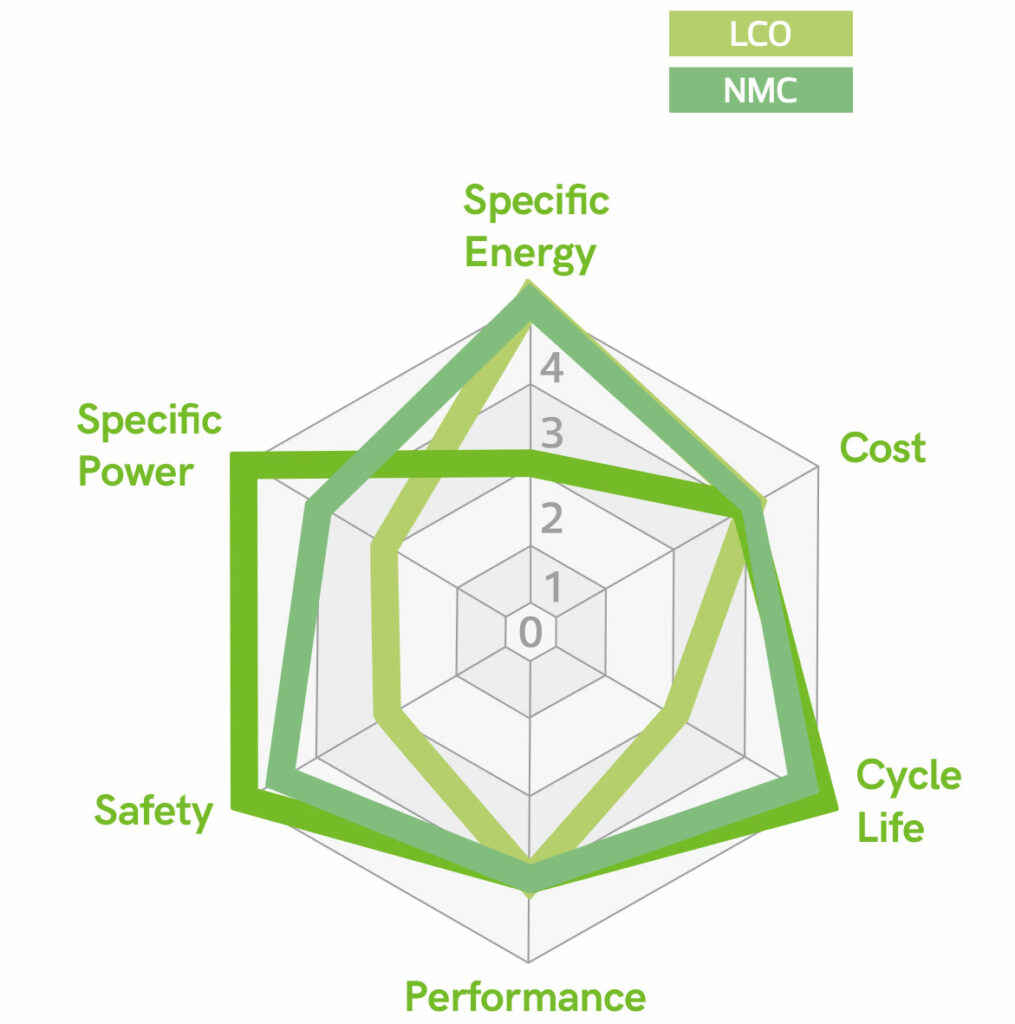
Comparison Common Lithium Chemistries
Here are many kinds of Li-ion Batteries but all have one common catchword “Lithium-ion”
These batteries vary in performance, and mostly. it’s the cathode material makes their own unique personalities
To learn more about their own characters and qualities, we clarify
them by listing three of the most common lithium-ion batteries to compare.
Lithium Iron Phosphate (LiFePO4 or LFP)
ILi-phosphate is more tolerant to full charge conditions and is less stressed than other lithium-ion systems if kept a high voltage for a pronged time. As trade-off, the lower voltage of 3.2V/cell reduces the specific energy. In addition, cold temperature reduces performance, and elevated storage temperature shortens the service life but is still better than lead acid, NiCd or NiMH. Li-phosphate has a higher self-discharge than other Li-ion batteries, which can cause balancing issues with aging.
ILi-phosphate is more tolerant to full charge conditions and is less stressed than other lithium-ion systems if kept a high voltage for a pronged time. As trade-off, the lower voltage of 3.2V/cell reduces the specific energy. In addition, cold temperature reduces performance, and elevated storage temperature shortens the service life but is still better than lead acid, NiCd or NiMH. Li-phosphate has a higher self-discharge than other Li-ion batteries, which can cause balancing issues with aging.

|
Lithium Iron Phosphate: LiFePO 4 , Graphite anode, Since 1996 Short form: LFP or Li-phosphate
|
|
|---|---|
|
Voltage, nominal
|
3.20V, 3.20V
|
|
Specific energy (capacity)
|
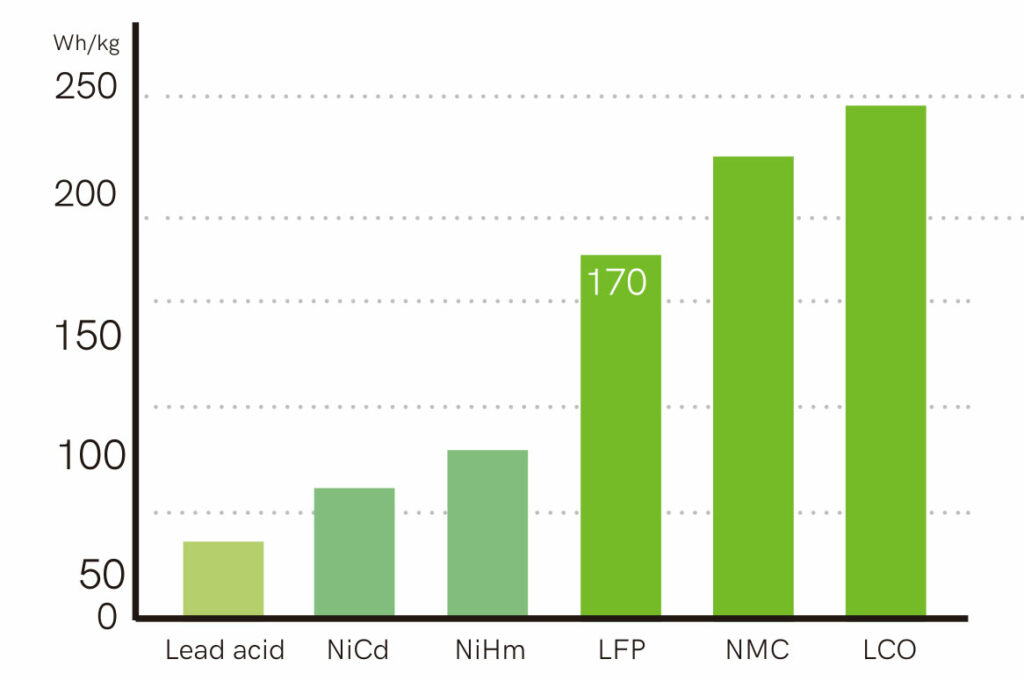
120–170Wh/kg
|
|
Charge (C-rate)
|
1C typical; 3.65V peak; 3h charge time
|
|
Discharge (C-rate)
|
1–3C continuous, 2.5V cut-off (lower that 2.5V causes damage)
|
|
Cycle life
|
3500–5000 (related to depth of discharge, temperature)
|
|
Thermal runaway
|
270°C (518°F) Very safe battery even if fully charged
|
|
Applications
|
Portable and stationary needing high load currents and endurance
|
|
Comments
|
Very flat voltage discharge curve but low capacity. One of safest Li-Ions. Elevated self-discharge
|
Lithium Iron Phosphate (LiFePO4 or LFP)

|
Lithium Cobalt Oxide: LiCoO2 (~60% Co ), Graphite anode, Since 1991 Short form: LCO or Li-cobalt
|
|
|---|---|
|
Voltage, nominal
|
3.60V
|
|
Specific energy (capacity)
|
150–250Wh/kg
|
|
Charge (C-rate)
|
0.8C, 1C maximum, 4.20V peak (most cells); 3h charge typical
|
|
Discharge (C-rate)
|
1C; 2.50V cut off
|
|
Cycle life
|
500–1000, related to depth of discharge, load, temperature
|
|
Thermal runaway
|
150°C (302°F). Full charge promotes thermal runaway
|
|
Applications
|
Mobile phones, laptops, digital cameras
|
|
Comments
|
Very high specific energy, limited specific power. Cobalt is expensive. Serves as Energy Cell.
|
Lithium Nickel Manganese Cobalt Oxide
(LiNiMnCoO 2 or NMC)
The secret of NMC lies in combining nickel and manganese. An analogy of this is table salt, in which the main ingredients of sodium and chloride are toxic on their own but mixing them serves as seasoning salt and food preserver. Nickel is known for its high specific energy but poor stability; manganese has the benefit of forming a spinel structure to achieve low internal resistance but offers a low specific energy. Combining the metals enhances each other strengths.

NMC is the battery of choice for power tools, e-bikes and other electric powertrains. The cathode combination of typically one-third nickel, one-third manganese and one-third cobalt offers a unique blend that also lowers raw material cost due to reduced cobalt content. Other combinations, such as NCM, CMN, CNM, MNC and MCN are also being offered in which the metal content of the cathode deviates from the 1/3 – 1/3 – 1/3 formu-la. Manufacturers keep the exact ratio a well-guarded secret.
|
Lithium Nickel Manganese Cobalt Oxide: LiNiMnCoO 2 , Graphite anode, Since 2008 Short form: NMC (NCM, CMN, CNM, MNC, MCN are similar with different medal combination)
|
|
|---|---|
|
Voltage, nominal
|
3.60V, 3.70V
|
|
Specific energy (capacity)
|
150–220Wh/kg
|
|
Charge (C-rate)
|
1C, 4.20V peak; 3h charge time
|
|
Discharge (C-rate)
|
2C continuous; 2.50V cut-off
|
|
Cycle life
|
1000–2000 (related to depth of discharge, temperature)
|
|
Thermal runaway
|
210°C (410°F) typical. High charge promotes thermal runaway
|
|
Applications
|
E-bikes, medical devices, EVs, industrial
|
|
Comments
|
Provides high capacity and high power. Serves as Hybrid Cell. This chemistry is often used to enhance Li-manganese.
|
Comparing Wh/kg
for Different Battery
Technologies
Summary Comparison:
|
|
LFP
|
LCO
|
NMC
|
|---|---|---|---|
|
Voltage, nominal
|
3.20V
|
3.60V
|
3.60V
|
|
Specific energy (capacity)
|
120–170Wh/kg
|
150–250Wh/kg
|
150–220Wh/kg
|
|
Charge (C-rate)
|
1C typical; 3.65V peak; 3h charge time
|
0.8C, 1C maximum, 4.20V peak (most cells); 3h charge typical
|
1C, 4.20V peak; 3h charge time
|
|
Discharge (C-rate)
|
1-3C continuous, 2.5V cut-off (lower than 2.5V causes damage)
|
1C; 2.50V cut off
|
2C continuous; 2.50V cut-off
|
|
Cycle life
|
3500–5000 (re-lated to depth of discharge, tempe-rature)
|
500–1000, related to depth of discharge, load, temperature
|
1000–2000 (re - lated to depth of discharge, tempe - rature)
|
|
Thermal runaway
|
270°C (518°F) Very safe battery even if fully charged
|
150°C (302°F). Full charge promotes thermal runaway
|
210°C (410°F) typical. High charge promotes thermal runaway
|
|
Applications
|
Areial work platform floor machines, trac- tions, low speed EVs energy storage system
|
Mobile phones, laptops, digital cameras
|
E-bikes, medical devices, EVs, indu- strial
|
|
Comments
|
Very flat voltage discharge curve but low capacity. One of safest Li-Ions. Elevated self-discharge
|
Very high specific energy, limited specific power. Cobalt is expensive. Serves as Energy Cell.
|
Provides high capa - city and high power. Serves as Hybrid Cell. This chemistry is often used to enhance Li-mang - anese.
|
Conclusions:
Lithium Iron Phospahte (LiFePO 4 or LFP) Li-phosphate has excellent safety and long life span but moderate specific energy and a lower voltage than other lithium-based batteries. LFP also has higher self-discharge compared to other lithium-ion systems.
Lithium Cobalt Oxide (LiCoO 2 or LCO) Li-cobalt excels on high specific energy but offers only moderate performance of specific power, safety and life span.